


Biografia
Interview par C.Marcangeli
…
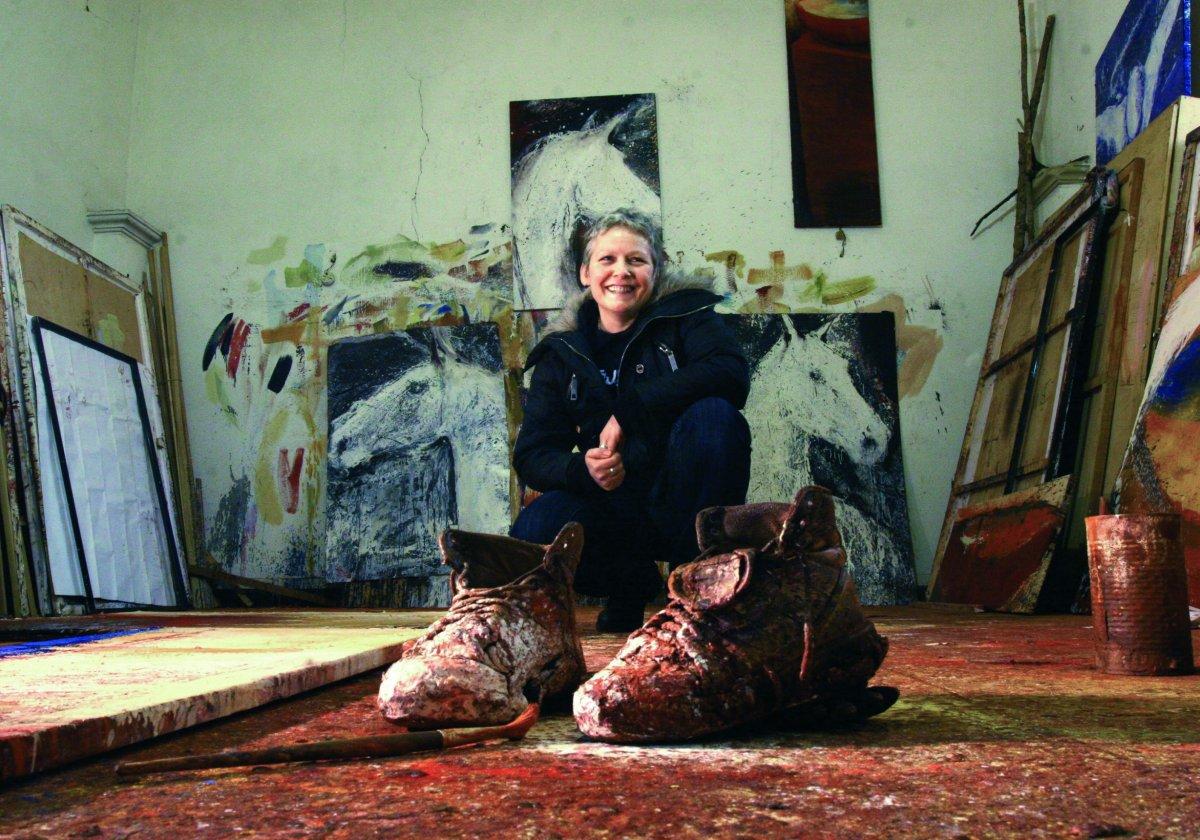
BK: I live and work in Thionville, at the heart of the Lorraine region’s steel industry. I grew up in those industrial landscapes, fascinated by larger-than-life foundries and molten metals. When I was a child, my father was a wrought-iron craftsman, and he had turned the garage into a forge. Seeing materials going through such transformations has left a mark, and has influenced my pictorial vocabulary.
...
BK: For archemists, the anathor is where transformations, mutations and fusions occur. And in Buddhist philosophy, “the bowl is only useful because it is empty.” Sometimes, as I rub my pastels, turning them back into dust, I think of the way Buddhist monks create their mandalas. Working on the receptacles becomes a kind of meditation – though I lack the humility of those monks who eventually delete their works…
CM: You also tackle the relationship between shapes and the space that surrounds them, as though the receptacle contained, delineated and defined space, while also negating and destabilising it.
BK: Sometimes when I work on the receptacles, I’m like a potter aiming for the ideal shape. But they always retain a kind of awkwardness. The perspective is never quite right as it strives for balance with space and colour. For example, I like the fact that the small pastels suggest much wider spaces, well beyond the human scale. Or that some receptacles are just a fixed and identifiable point in the midst of an abstract space made of materials and traces, or in the midst of a vast “landscape.”
…
BK: I play with solids and liquids and with raw pigments. This enables me to capture movements, gestures, traces, shapes that emerge and find a balance in the materials. Chance is an invisible factor at work throughout. But it only becomes visible when all the elements have found their place, after you have let it do its thing – which is not the same as letting yourself get carried away…
…